
MILO IN CARE & EDUCATION SETTINGS
A simple way to support communication across care and learning environments

Care & education settings work differently.
Some moments happen in structured support.
Some happen during transitions.
Some are hard for children to express.
Across foster care, residential homes, schools, CAMHS, and medical settings, communication needs to be simple, safe, and consistent.
Milo offers a way to share small messages that children can keep with them and return to when needed.
No screens.
No complexity.
Just something physical, personal, and easy to use.
Join Our Journey
TRY MILO TODAY WITH OUR
HUG BUDDY COMMUNITY PILOT
Children’s Hospices & Long-Term Medical Care (UK)
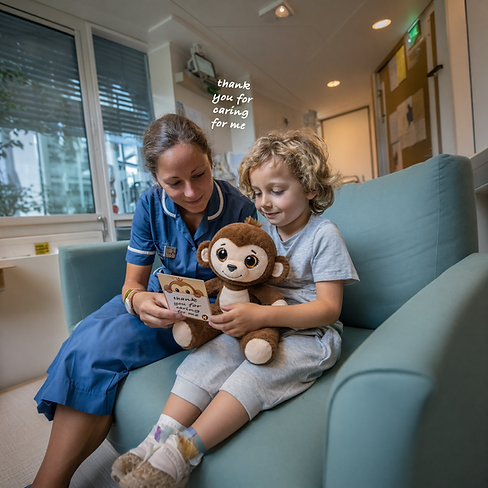
Milo in Children’s Hospices & Long-Term Medical Care
A gentle communication companion during extended treatment and supported stays.
Children receiving hospice support or long-term medical care often experience extended periods away from their usual routines, familiar spaces, and peer environments. Hospital wards and hospice rooms, while supportive and compassionate, can still feel clinical, structured, and unfamiliar.
Milo can offer personal reassurance into these environments. Through Buddy Cards - family or trusted staff can offer consistent encouragement, comfort, and presence.

Primary Schools & SEN
Departments
Milo for Primary Schools
A structured wellbeing companion for pastoral and SEN support environments
Primary schools increasingly support children experiencing anxiety, emotional dysregulation, friendship challenges, behavioural difficulties, and learning-related stress.
Milo can offer reinforcement within the school environment. Bespoke Buddy Notes that children can keep privately and revisit when needed.
Foster Care (UK)
Milo for Foster Care
A structured communication companion for children in placement.
Children entering foster care often experience significant disruption, uncertainty, emotional instability. Unfamiliar environments can create heightened anxiety.
Milo can offer Bespoke Buddy Cards that foster carers, supervising social workers, or trusted adults can share with the child.


Children’s Residential Care Homes (UK)
Milo for Children’s Residential Care Homes
A structured communication companion within supported residential environments.
Children living in residential care settings often arrive following significant instability, complex safeguarding histories, or behavioural challenges.
Milo can offer bespoke Buddy Cards for key workers and residential staff. They can share these supportive messages with the children to reinforce safety, routine, and encouragement.
CAMHS & Child Mental Health Services (UK)
Milo within CAMHS & Child Mental Health Services.
A structured support tool for emotional expression and regulation.
Within CAMHS and associated child mental health services, practitioners support children and young people experiencing anxiety disorders, low mood, and trauma responses.
Milo can offer therapists or practitioners bespoke Buddy Cards. These provide short prompts, coping reminders, or affirmation statements that the young person can revisit independently.

Milo as a practical support across care and learning environments
Milo can be introduced in different ways depending on the setting.
It is flexible, simple, and fits into existing routines without adding complexity.
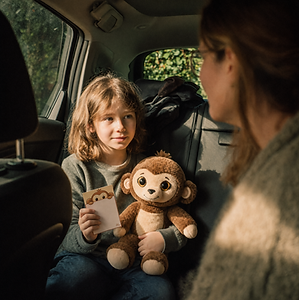
Starting point
Given when a child enters a new setting. It provides something that is theirs from the beginning, without needing explanation or process.

Daily use
Used as part of everyday routines. A short message can be added at the start or end of the day, or around key moments when support is needed.

After key moments
Used following incidents, difficult conversations, or emotional moments. A message can reinforce what has been said without repeating it verbally.
A simple way to say “I’m here”
In care and education settings, children move through structured days
and moments that are not always spoken. A short message inside Milo gives something clear to return to. A reminder, a reassurance, or a simple
sense that someone is there.
Keeping the Messages
Over time, messages build up. Small notes and drawings written by parents,
carers, or staff, kept by the child, and returned to when needed.
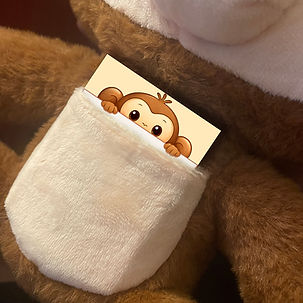
Some are kept inside Milo
A few messages stay with Milo day to day. These are the ones that matter in the moment. A reminder, a reassurance, or something familiar the child can return to quietly. Used by parents, carers, or the child themselves, they remain personal and close at hand.

Some are placed on the Milo Message Poster
Certain messages become visible within a room or setting. Shared between children, families, or carers, they build into something that can be seen and recognised. A simple way to reinforce positive moments and keep them present in everyday spaces.

Or write and keep them in the Buddy Pad
The most important messages are kept. Collected over time by families or carers, they form a record that can be revisited later. Not just for now, but something that holds meaning as the child grows.
They Become Part of the Child’s Story
Not just individual notes, but something shared between parents, carers, and the people supporting the child. Messages written over time begin to build into something consistent and familiar. They are not one-off moments.
They are kept, returned to, and used again.

Join Our Journey
HUG BUDDY COMMUNITY PILOT
Milo, Care & Education
Pilot Excersize
At this stage of Milo’s journey, our pilot within care and education settings is a listening exercise.
We are offering small-scale pilots to organisations to understand how Milo can responsibly support children, staff and existing communication frameworks.
Our intention is to work collaboratively with professionals.
We are open to:
-
Feedback
-
Practical suggestions
-
Safeguarding considerations
-
Implementation guidance
-
Adaptations that improve suitability within structured environments
The purpose of the pilot is to learn, refine, and ensure that Milo integrates safely and effectively within the environments we aim to support.
We are not approaching organisations with a fixed model. We are approaching with a simple tool, a willingness to listen, and a commitment to develop Milo in partnership with those who use it.